Blue, Blue, Blue
I attended an indigo dyeing course in Fujino, Japan in May 2025
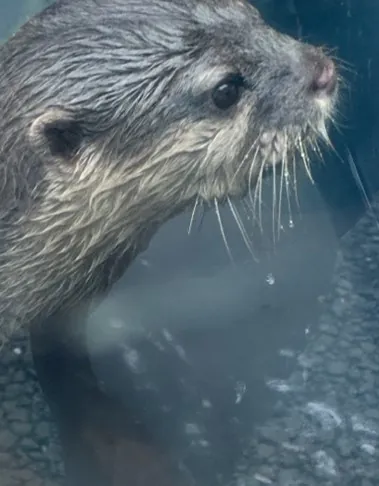
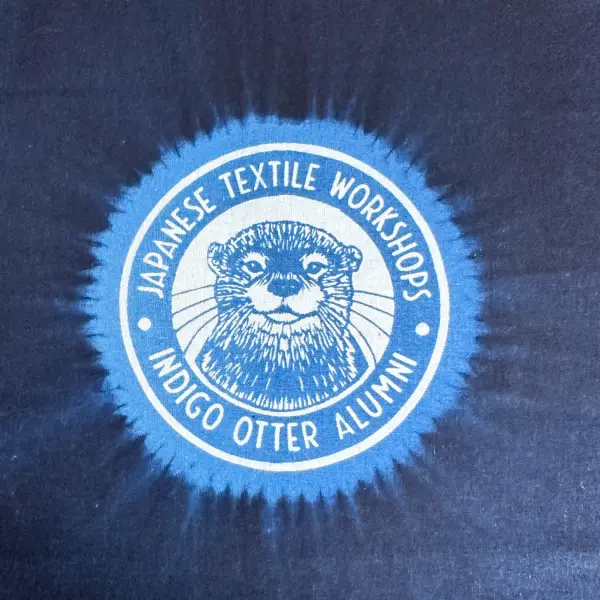
A group of nine international students were named indigo otters,
maybe because we constantly dipped in and out of water!
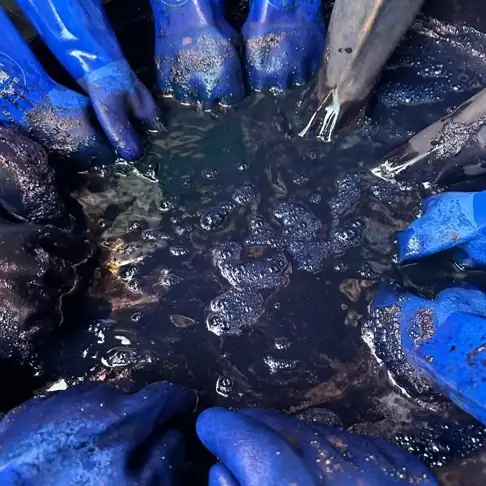
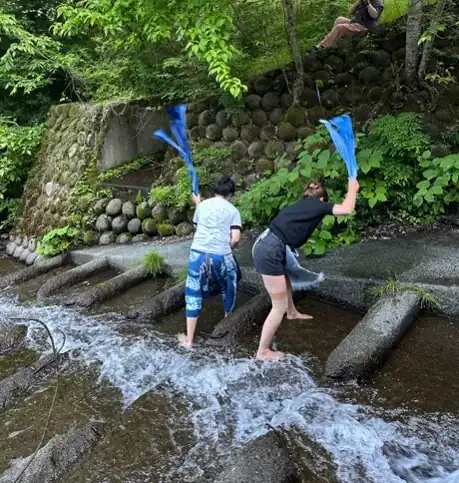
Process, Production & Product
These images are all taken during this amazing experience of learning from a Master*
The intense course included an introduction to many techniques and processes
but most importantly the indigo vat . . .
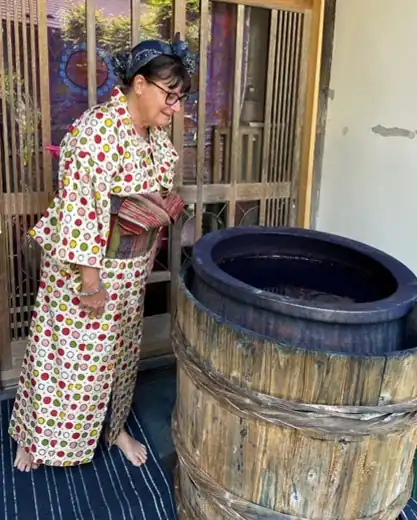
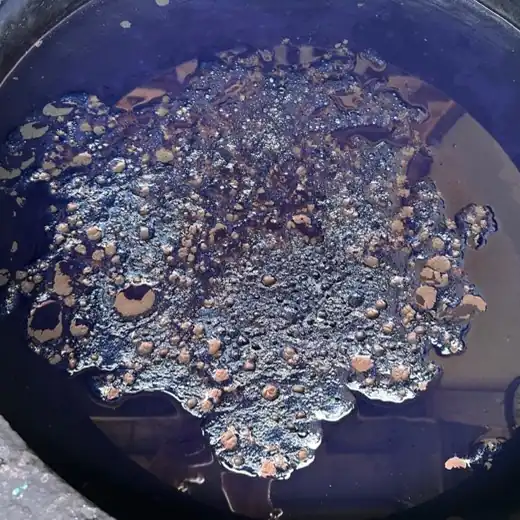
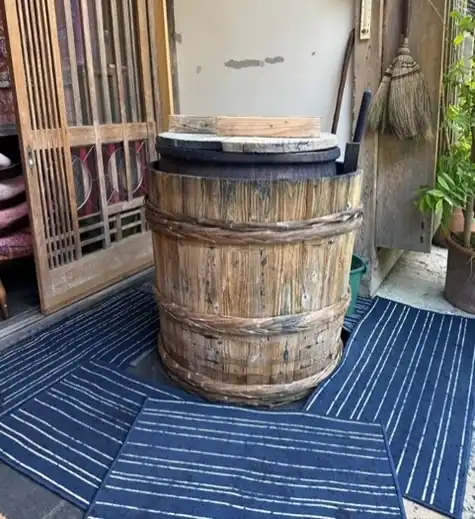
* Chief Indigo Otter : Bryan Whitehead : Japanese Textile Workshops
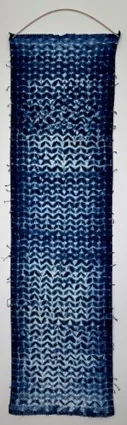
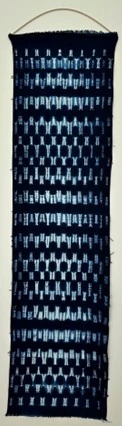
Shibori
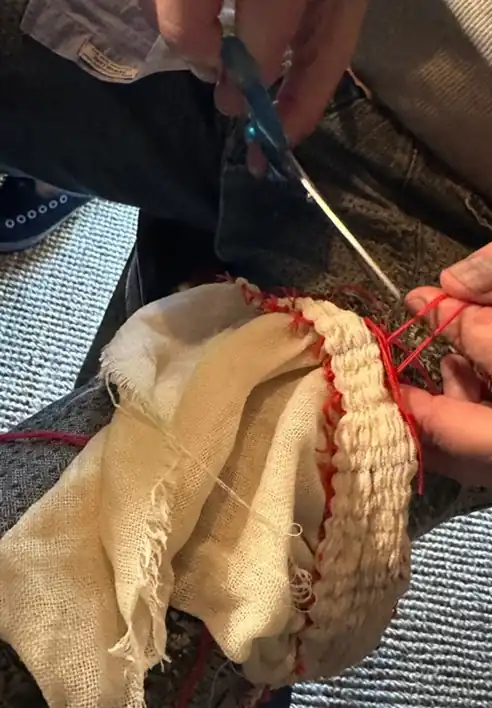
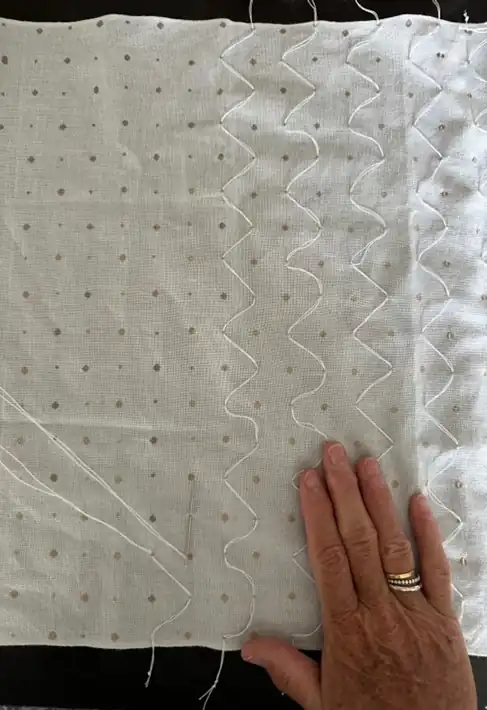
Hand Stitching to Create a Resist to the Indigo Dye
After repeated dipping into the vat, the items are left to oxidize in the fresh air. Stitching is removed then the dyed cloth must be thoroughly washed – luckily the nearby stream was a perfect place to rinse and bash the cloth to remove the excess indigo.
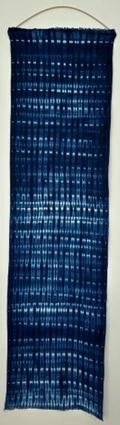
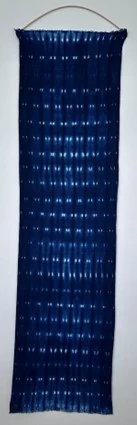
Tie Dyeing
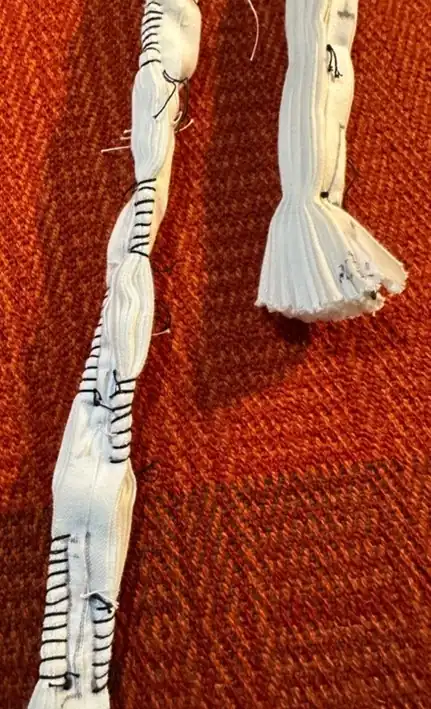
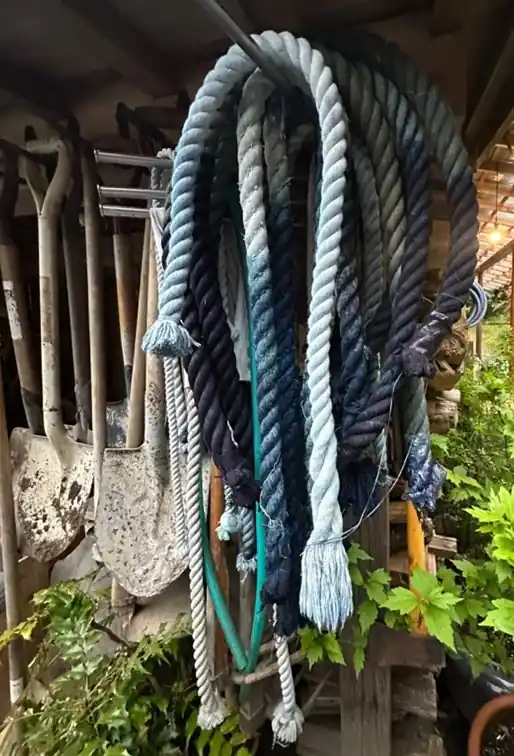
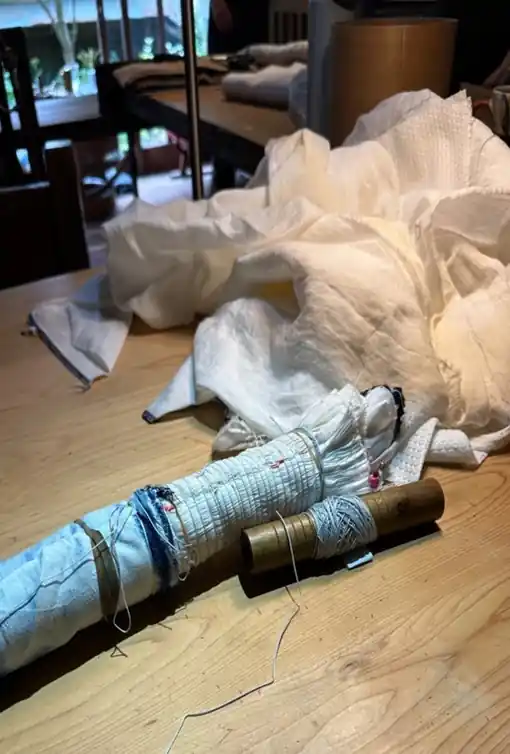
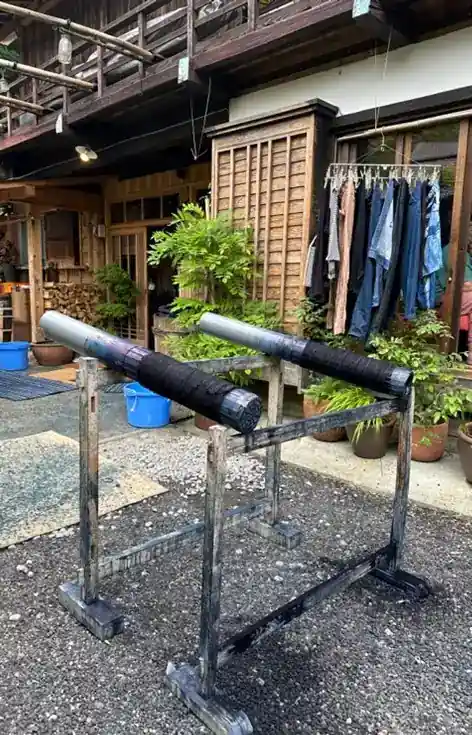
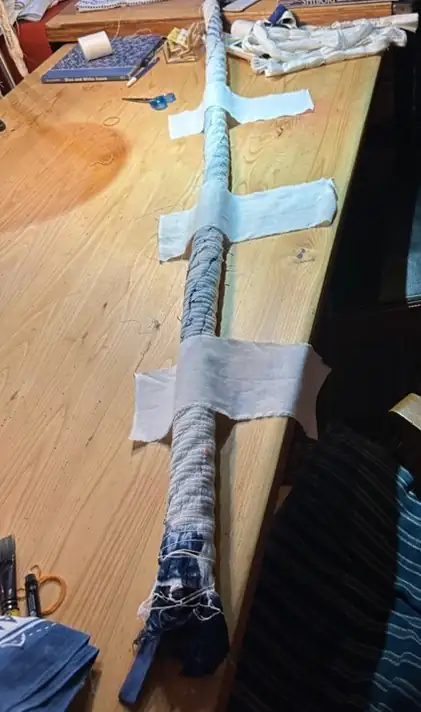
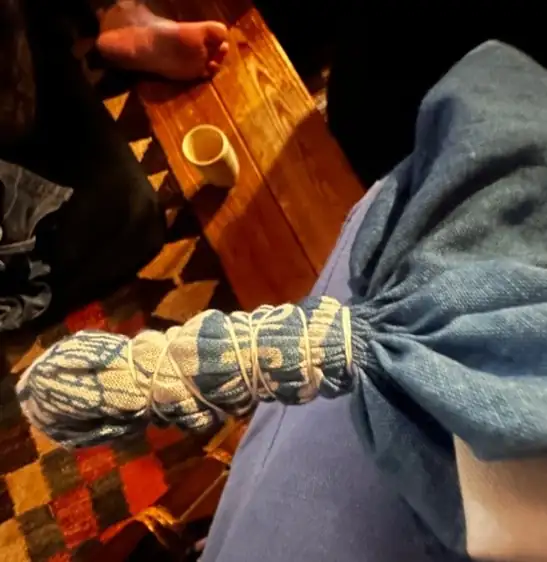
Cloth is wrapped around rope, plastic pipe or many other supports
and tightly bound to create the resist.
Using fabric ‘bungs’ is another option to create further layers
of resist and colour intensity.
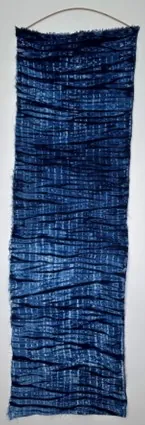
The techniques to tie dye fabric are infinite, but most results are purely serendipitous,
which is why the process so magical.
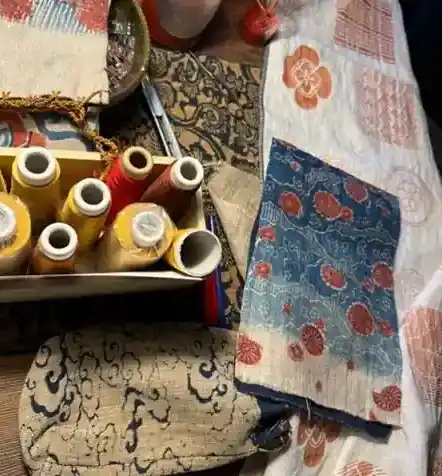
Stencil Printing
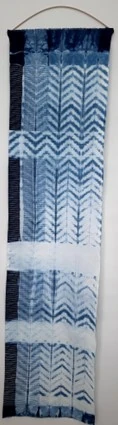
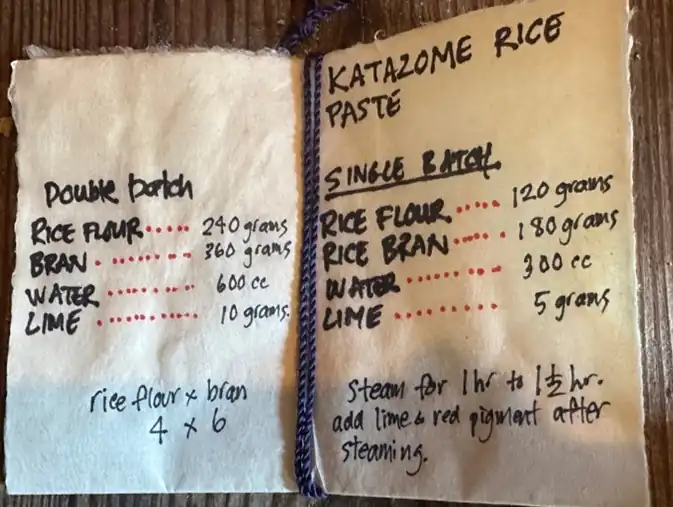
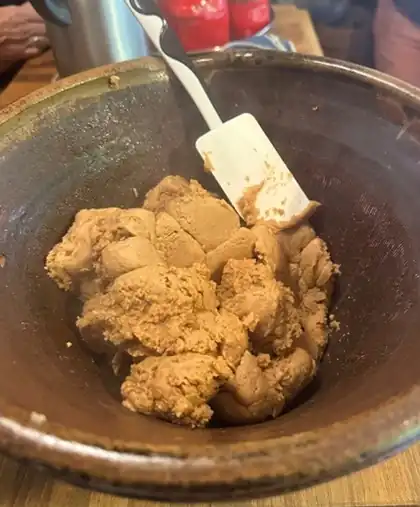
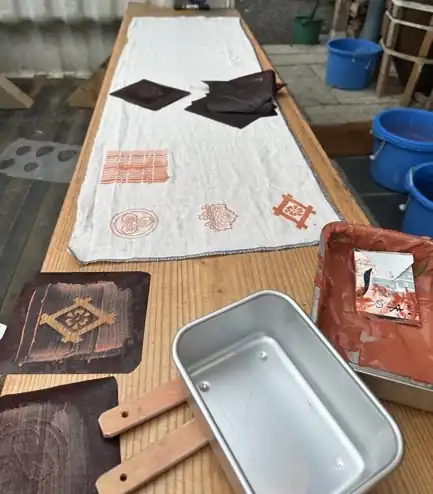
A homemade rice paste is used to create the resist.
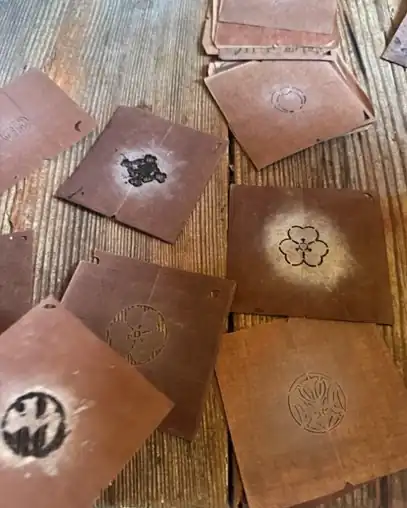
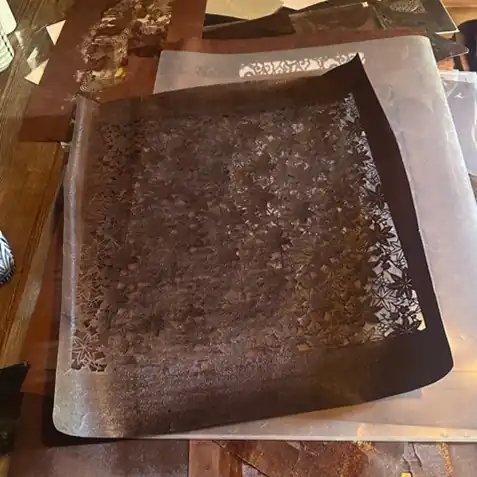
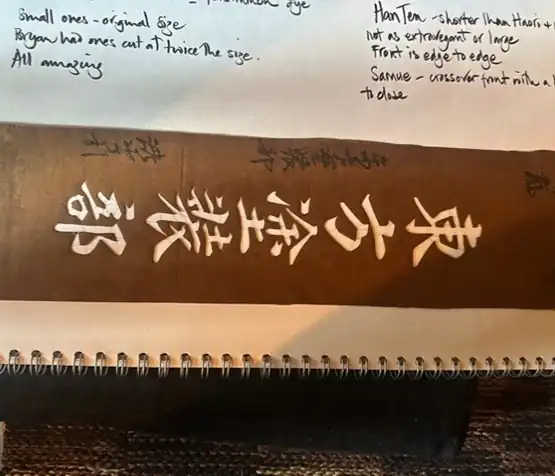
Traditional persimmon paper screens were used to screen print the designs.
The scale of these screens is diverse; the patterns – simple or intricate – are amazing.
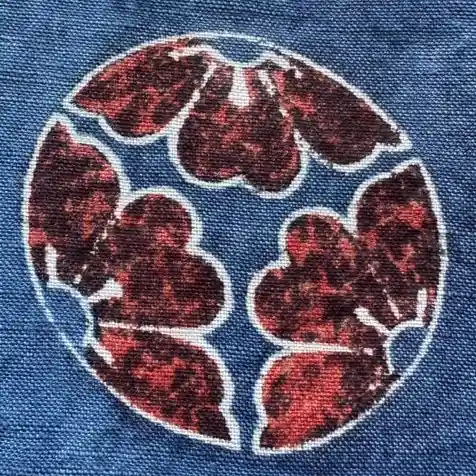
Stencil Printing: Madder
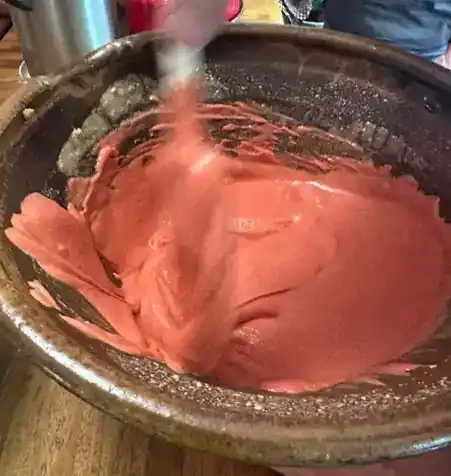
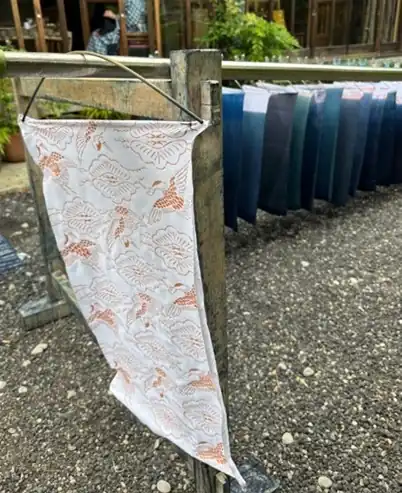
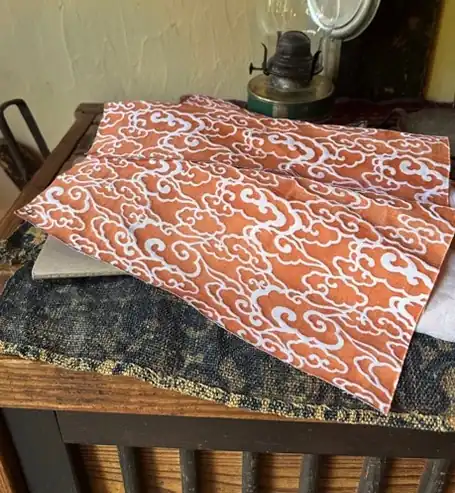
A resist using a homemade soy madder paste, is a secondary process which offers further
exciting design and colour options, that again are limitless.